Imagine this: it’s a busy Saturday afternoon in your store. The cash register is ringing, customers are trying on shoes or dresses, your phone is ringing because a delivery is coming in. You have your hands full, and yet at that very moment, a perfectly timed email goes out to a customer who bought something from you yesterday. Or to someone who just signed up for your newsletter online. Or to a regular customer who has a birthday today.
That's the magic of email workflows. They keep working, even when you're busy with the daily grind.
What is a workflow, actually?
A workflow is simply a series of automated emails that are sent based on the behavior or characteristics of your customer. Not everyone receives the same email at the same time. The content and timing are tailored to what your customer does or does not do.
For an entrepreneur, this means: you set up the emails once, and then they run on their own. It feels personal to the customer, while you hardly have to look after it anymore.
Why would you do this?
Because it saves you time and because it reaches your customers at just the right moment. Instead of sending out random newsletters, you let the timing depend on what is happening in your customer's life. And that works. Customers feel seen and taken seriously.
A shoe store that automatically sends a friendly reminder six months after a purchase: “It’s been half a year since you bought your last pair of shoes from us. Time to refresh your wardrobe?” that feels almost like a personal approach.
The three basic workflows that anyone can use
The welcome flow
Every new subscription to your newsletter deserves attention. Not with a discount code or a hard sales message, but with a warm introduction. Tell who you are, what your customers can expect from you, and why your store is unique. For a boutique, it could be the personal selection you make. For a sports store, it could be the passion for performance. For a lingerie shop, perhaps it's the story of how you bring comfort and style together.
It's about the customer feeling: I want to be a part of this.
The brand flow
Is someone buying a specific brand from you? Then that is a signal. They feel connected to that brand, and you can further nurture that interest. Sending an email a week after the purchase showing which items from that same brand are also available, or sharing the vision and values of that brand, feels like service.
The beauty of it is that the chance of customers opening such an email and clicking through is extremely high. After all, you are tapping into a preference they have already expressed with their purchase.
The birthday email
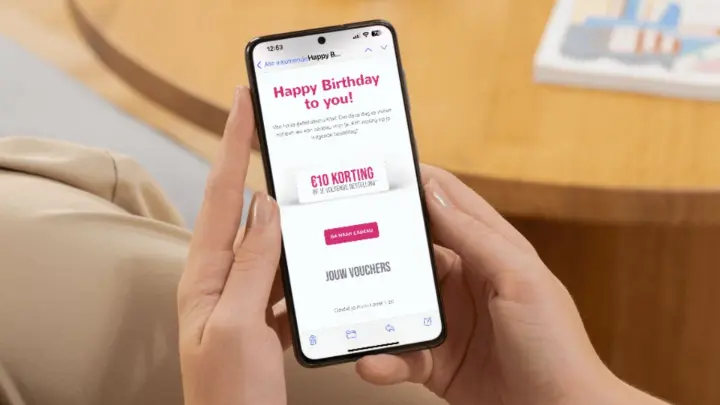
It sounds simple, but it works wonders: a personal greeting on your customer's birthday. With a small gesture, it could be a discount code, but also just a warm message or a small gift in the store. The gesture matters. And often, it's exactly that little nudge that makes a customer decide to come back to you.
Extra flows that many retailers forget
In addition to these three basic workflows, there are a few golden opportunities.
One of them is the reactivation flow. If someone hasn't made a purchase in six months, it's a shame to let that customer slip away. A friendly reminder can work wonders. You can give it a playful twist: "We miss you! It's been half a year since you were with us. It's high time to surprise you again."
Another smart flow is the seasonal reminder. Suppose someone bought a jacket from you last year in the fall. Then you can send an email around the same time this year: “Last year, you chose our fall collection. Have you seen the new one yet?” It feels personal and relevant, without you having to manually keep track of who bought what and when.
The art of timing and tone
A workflow only works if the timing is right and the tone is good. Sending a new offer too soon after a purchase can come across as pushy. Responding too late can mean you miss the opportunity.
The art is to find the balance. Think about the relationship you have with your customer. A birthday email can be cheerful and personal. A brand flow can be exciting. A reactivation email can be curious or playful, almost as if you want to wake someone up again.
And remember: it doesn't have to be perfect. You don't have to write a novel. Often, a short, sincere message works better than a long text.
Working while you sleep
The best thing about workflows is that they keep working for you, even when you're busy with other things. You set it up correctly once, and then it runs on its own. Customers receive relevant emails, feel seen, and you notice that your revenue increases without having to invest daily time in it.
Especially in an industry like fashion, where seasons change quickly and inventory is crucial, this is worth its weight in gold. You can proactively point customers to new collections, smartly clear out leftovers, and build loyalty, all while you are at the register or making purchases.
From customers to ambassadors
Ultimately, email marketing is not just about making more sales. It's about building a relationship. When customers feel that you understand them, that you are relevant, and that you are thinking along with them, they become loyal. And loyal customers are often your best ambassadors. They tell their friends about your store, they engage with your social posts, and they look forward to your emails.
And the beautiful part? It all starts with a few simple workflows.
Vraag een demo aan en zie hoe e-mailworkflows jouw fashionwinkel slimmer maken.
Ontdek hoe je klanten automatisch betrekt en loyaliteit verhoogt.